
The Life of Soil
Silent SpringThis flow follows Carson’s account of soil as a living community vulnerable to persistent chemical disturbance.
increasing Bearing strength in each event
 decreasing
Bearing strength in each eventdecreasingSoil Begins as Living Work

The Ground Takes Shape
Rock and Organism
Soil forms through the interaction of weathered rock and living things. Lichens, mosses, microbes, and countless other organisms contribute to its development.
A Living Resource
The soil is not inert material beneath crops. Its capacity to support plants depends on continuing biological activity and the exchange of elements between air, water, and living tissue.
A Hidden Community
Work Below the Surface
Microbial Activity
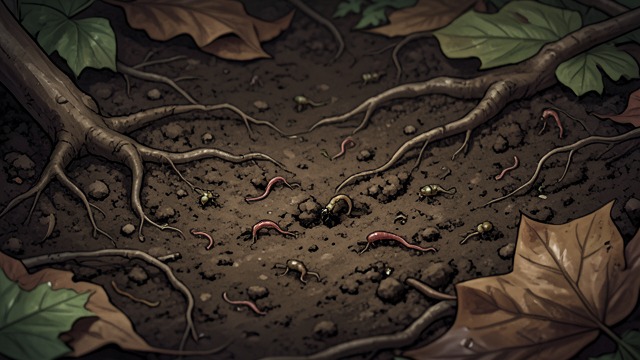
Bacteria and fungi break down plant and animal remains and help make nutrients available. Other organisms support transformations essential to soil fertility.
Larger Contributors
Mites, springtails, insects, and earthworms participate in decomposition and aeration. Their work links fallen vegetation to the soil structure that supports future plant growth.
Poison Enters the Soil Realm
A Broad Exposure
Direct and Indirect Contact
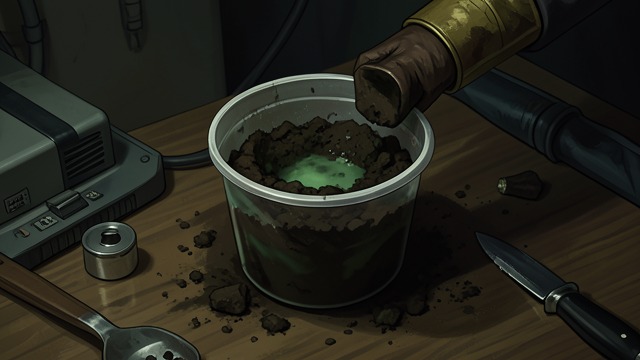
Chemicals may be introduced as soil treatments or carried downward by rain from treated leaves. Organisms below ground encounter substances designed to kill life elsewhere.
A Neglected Question
Carson asks whether a broad-spectrum pesticide can kill a target without also harming beneficial organisms. The limited attention given to soil ecology makes that question especially urgent.
Cycles Are Disturbed
Fertility at Risk
Chemical Processes Change
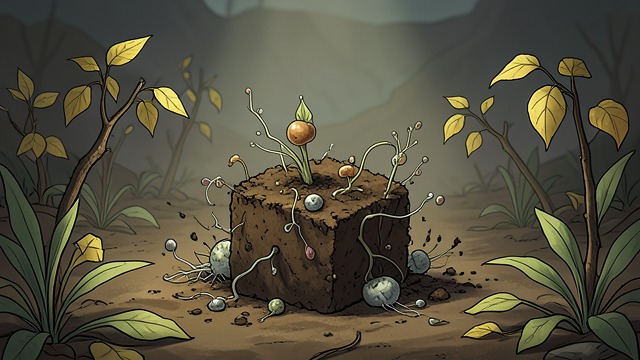
Some pesticides interfere with nitrification and with bacteria that help plants obtain nitrogen. Other treatments disturb associations between fungi and plant roots or shift populations among soil organisms.
Unintended Release
When predators decline, organisms formerly held in check may increase. A chemical treatment can therefore change both the soil’s metabolism and the balance of species living within it.
Residues Outlast the Spray
A Persistent Legacy
Accumulation
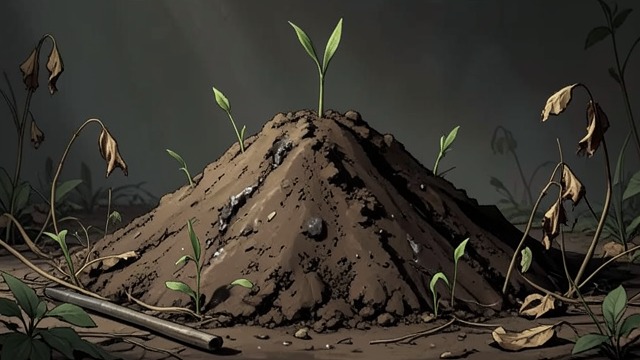
Carson reports long-lived residues in soil and describes repeated treatments building up over time. Some contaminated soils continue to affect crops years after application.
Future Uses Constrained
Food plants may take up residues from soil even when they are not sprayed directly. The lasting contamination can limit what farmers can safely grow and make past chemical decisions part of future food production.
Across geological time before modern agriculture
As Carson describes the soil’s inhabitants
After pesticide application to crops and forests
In studies described in Chapter 5
Years after treatment
